


A Note caught my attention this week. It said roughly this: we don’t always speak the same language. Sometimes you talk to someone for an hour and it flows, to the point where you feel like you’ve known each other forever. And other times, you use the same words, but nothing gets through.
I replied very simply: I am fluent in five languages, and I confirm it. That doesn’t mean we understand, or get, each other.
I kept thinking about that sentence. I posted my reply, but I came back to it and added that it had inspired me for my next article here. I realized that I had experienced this observation deeply through my various expatriations. And I want to share this life story because, in the end, it might well serve as a lesson for someone younger.
So, perhaps it is time for me to tell it.
Speaking like the others
It started very early. Ever since I was a little girl, I spent my summer vacations with my grandparents at the Vilarromà campsite, in Palamós, on the Costa Brava.
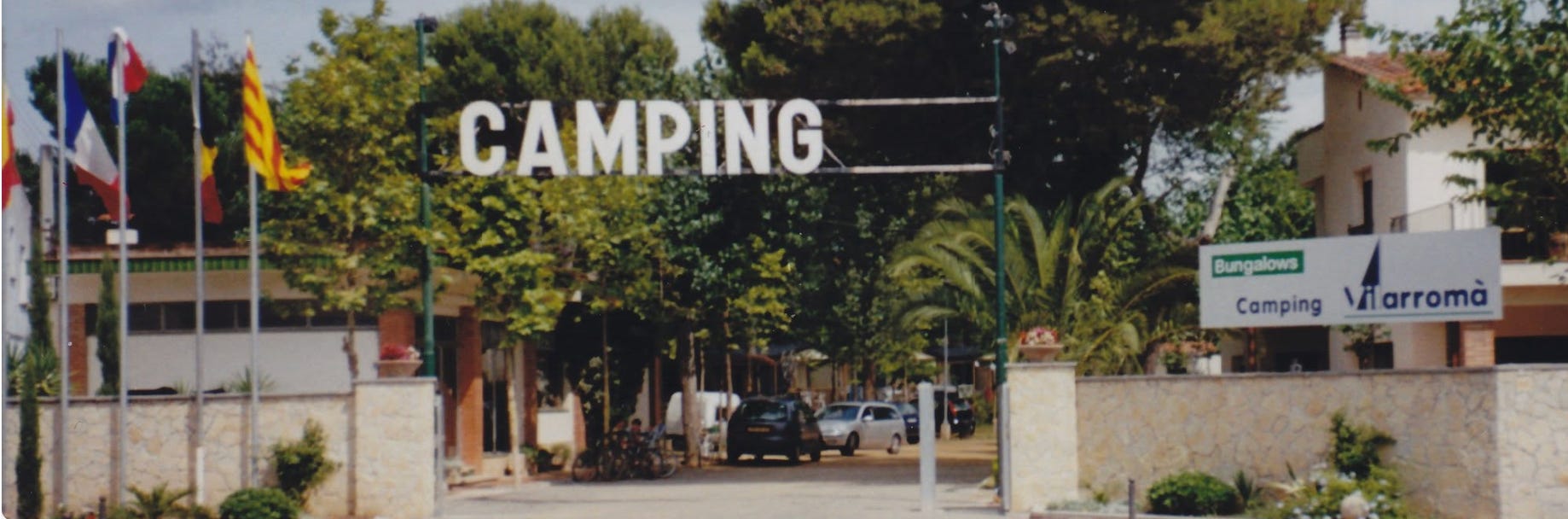
I must have started going there when I was 4 years old. (When I think back on it… what I experienced there was really a reflection of who I became…but anyway, side note).
Coming back to this campsite every year in the late 70s, at a time when life was good and trust was very different from today, gave me that notion of feeling at home somewhere other than my own house when I was quite young.
I wandered around freely. I had magical moments with all the children at the campsite, who came from Belgium and all four corners of France, as well as with the adults. I remember Mr. Muller from Belgium. I loved going to visit him at his caravan because he would do that magic trick that amazed me every time: he would always find a coin behind my ear!
A pretty nice thing to note here. As I grew up, I couldn’t hide from my grandmother where I was coming back from. Of course, I didn’t have anything to hide anyway, but it turns out that when I came back from being with the Belgians or the people from Marseille, she knew immediately because I spoke just like them!!
I swear it’s true! Starting at 8-10 years old, I used to talk to all the French people at the campsite!
"From 'Tu viens avec?' to 'oh fada!', everything gave me away.
'Tu viens avec?' is literally 'Are you coming with (me)?' is literally 'Are you coming with (me)?' from the Dutch 'Ga je mee?’ And 'oh fada!' is one of those expressions you will never hear a Parisian say.
My first ‘Nonos’
Ah! The Nonos! That's how I loved to call the Dutch. Because, as not everyone knows, in French there is an aspirated 'h', and you don't make a liaison: so you say 'un Hollandais' (a Dutchman) and never 'un n-Hollandais' — the sound that would slip in if you linked them. That’s hot the Dutch became my Nonos.
It was around the time I was 11 or 12, likely when my cousins started learning English in middle school, that I began hanging out with the Dutch, more and more each year. And I loved them! I really liked the Dutch because despite our punk or ska styles back then (my older cousin with a mohawk, and her sister and me with black and white bobs, even on our Doc Martens painted with correction fluid Typex), well, none of them had any problem welcoming us into their circle of friends. I always felt like the Dutch couldn’t care less about what social class you came from, what your parents did, how you dressed, or how you styled your hair.
They were much more tolerant than the other children. I loved that about them. And I loved them.
And then this frustration started to grow inside me:
when they spoke Dutch among themselves I felt excluded from their space.
And I remember that afternoon… I must have been 13 or 14 years old. My cousins and I were at the tent of 3 gigantic Dutch guys. They started talking in their language and I listened to them carefully. I remember ‘listening’ with my whole body. That way of listening must have been so intrusive that Erik said something like “Why are you looking at us like that?“ and I answered something like: “I understood! You said this, this and that! “. And there were the three giants looking at me bewildered. YES!!! I had understood!
This moment is a turning point in my life. It was then decided that I was going to learn their language and that I would never again feel excluded from their circle!
And that is how I ended up in the Netherlands, much later, to learn Dutch. And of course, to my father’s surprise, to stay there for my studies.
I arrived there as a young au pair. Gently, in a French family, not far from the NT2 (Nederlands als Tweede Taal) courses at the Vrije Universiteit in Amsterdam. I learned the language full-time, the way one learns a language when one really wants to live in a place. I put everything I had into it. And it worked. I integrated perfectly.
I did university studies in Communicatie Wetenschap, I had courses in Dutch for which I read massive textbooks, both in English and in Dutch. The Universiteit van Amsterdam was super nice: for the exams I was allowed to use a dictionary. Then I made friends for life there.
I loved living in Holland. I was truly at home there. And I spent a whole lifetime there.
But looking back, I understand better what worked in the Netherlands. And it wasn’t just the language I was learning full-time.
I wasn’t getting to know an unknown people. I was reconnecting with a people I had already chosen, as a child, on the beaches of a Costa Brava campsite. Those tolerant Dutch people who couldn’t care less about your class, your clothes, or your punk mohawk. I was already resonating with them before I spoke their language.
Language didn’t create the resonance. It came to crown it.
That is what I didn’t understand at the time. I thought it was the language that had integrated me. I thought I had found the formula: learn the language, commit yourself entirely to it, and you’re home.
I had to go to Israel to measure the error.
I will tell you the rest of this personal reflection in “The Shock of Israel” in a future installment to follow in Correspondences.
By Audrey ✨, founder of The Aligned Shift, an editorial house with two doors: Correspondences | The Aligned Shift Magazine for texts, and Words of Shifters, the podcast, for speech.
Do you accompany others? I would love to read or hear you here.
Over time, your presence in the house earns you a profile page on thealignedshift.media: a page in your name, linked to your texts, where people looking for a practitioner can find and contact you. It cannot be bought or requested; it is earned through presence. More visibility online, so a better chance of being found by people who search through AI agents.

PS: The note that inspired me is from Fred, Le livre «858 Marches…»
Call for contributors: what if your future clients met you before choosing you?

Are you a practitioner helping others shifting lives?