



“I am here.
I do not have consciousness of being.
I am consciousness of being.”
This sentence closed the previous article, and it opens a doorway into what is already here when we stop clinging to the question “What should I do next?” .
In The eye cannot see itself, I spoke about “zombie doing”: a mechanical efficiency that can get a lot done, yet remains strangely disconnected from our actual presence. That way of doing is not wrong; it is simply incomplete.
It does without being.
It produces without inhabiting.
It looks like a body walking without a soul.
So what would it mean to do from being (or as I call it to live beingly)?
The Tree That Grows Without Trying
Coming back to solid ground after six weeks on the Pacific Ocean, the first place this question took me was into the quiet steadiness of land and trees.
Look at a tree. It does not decide to grow. It does not seem to force itself to extend its branches, push out leaves, let them fall, and begin again season after season. It is rooted where it is. It receives light, water, soil, and it grows. Naturally. Without wondering whether it is fast enough, tall enough, productive enough.
If it needs space, it adapts. It does not stop to ask whether it will be “beautiful” if its shape isn’t straight. It is simply there. Tree.
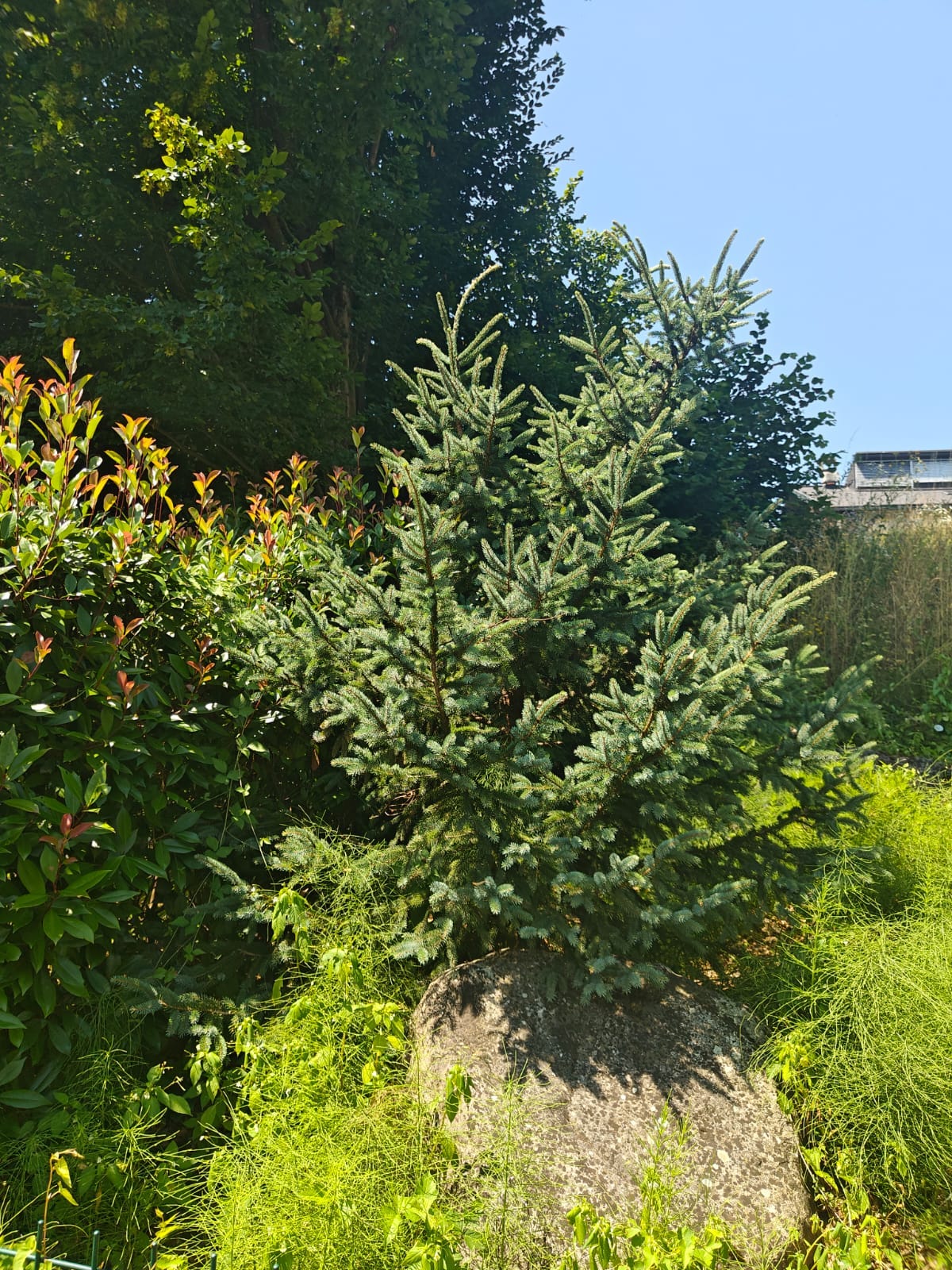
Doing from being is something like that. It is action that rises out of an inner rootedness rather than an outer commandment. It is dancing with what is, instead of fighting against it.
Why, Then, So Much Effort?
You might tell me it is easy to romanticize a tree. But can we really compare an oak or a pine to a human being?
I believe we can. What I want to name here is that you, me, the tree, the animals, in fact everything that is on this planet, are living images of consciousness, anchored in matter. And precisely for that reason, none of us should have to strain so hard to live, to be, to evolve.
Human thought is, in the end, the only thing responsible for our difference. It is as if consciousness had turned our brain into its mirror. Reflections of what is keep reflecting themselves, again and again. Even our language tells on us: to reflect, reflection, reflexive: all of these words fold back on themselves in interesting ways for this kind of inquiry.
But effort lives there too: inside the reflection. Over the years, I’ve noticed that the more I hand my reflections back to themselves (answering my voices with “So be it,” “This is how it is,” or even a simple “Thank you” for the experience given), the more I feel myself living in being, right here, in the present moment.
The Dance Between Doing And Being
This is why doing and being are not in opposition. It is not about “stopping all doing in order to be.” It is about Doing While Being: keeping the thread of inner presence while we act, like a dancer who breathes through every movement.voix.thealignedshift
When I do from being:
My actions carry a different quality: lighter, more precise, more aligned.
I stop exhausting myself chasing outcomes and start cultivating a way of being and acting.
Doing becomes incarnation: a way my humanity gives shape to what is already alive inside.
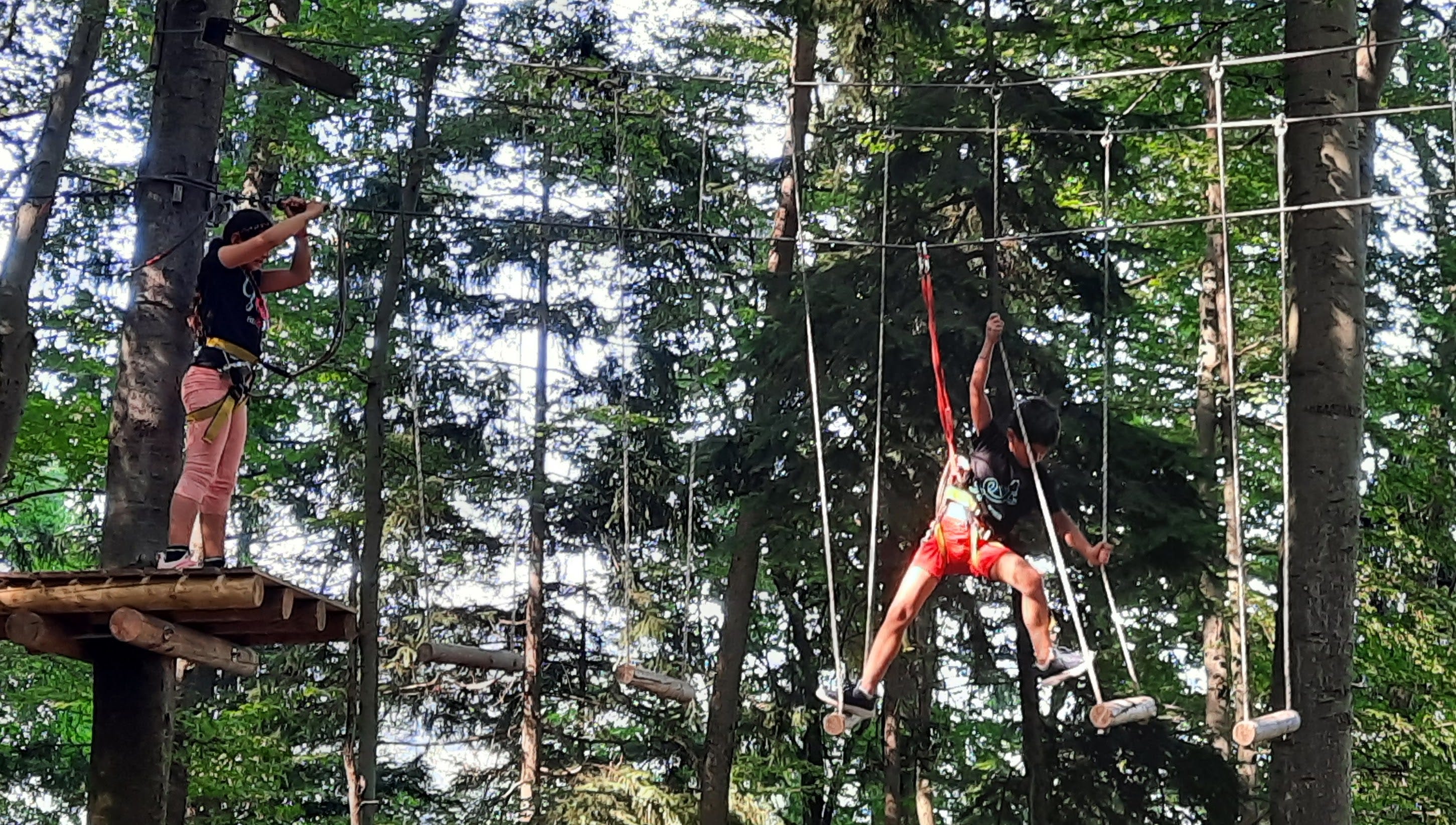
There is nothing more emblematic, for me, than my children in the trees: bodies moving among branches, not yet weighed down by “Should I?” or “Am I allowed?”, simply being in pure action, climbing, playing, dancing their way forward in the canopy.
A Question To Walk With
Since I began writing on Substack, one question has become a kind of compass for me:
“From where am I doing?”
Is my action coming from an injunction, a fear, a sense of duty? Or is it coming from presence, from a living impulse, from a deep inner yes?
Sometimes the answer alone is enough to loosen the entire knot. Because doing while being is not a performance. It is a homecoming.
And day after day, I practice placing my human Being back at the center of everything I do.
When you recognise yourself in this dance between doing and being, you are already part of the ecosystem I’m building here. The Aligned Shift is made for practitioners and clients who want to act from being, and to meet by resonance rather than by noise.
If this is you, let these words be an invitation: come write with us, or come find the person you want to walk with, through their stories. Contact Audrey ✨ now or fill in the form here.
Audrey ✨ lives between worlds, languages, countries, outer and inner territories. A life spent crossing oceans, countries, collapses, rebirths.
She is building The Aligned Shift, an editorial house where practitioners and their clients meet by resonance. Two doors: Correspondences | The Aligned Shift Magazine for texts, and Words of Shifters, the podcast, for speech.
Her work invites those who don’t fit the noise to show who they are, so the right clients can find the person they want to walk with.
Do you accompany others? Write or speak with us. Over time, your presence in the house earns you a profile page on thealignedshift.media: a page in your name, linked to your texts, where people looking for a practitioner can find and contact you. It cannot be bought or requested; it is earned through presence. More visibility online, so a better chance of being found by people who search through AI agents.
Thank you for this!
Especially the image of the tree stayed with me. There is something profoundly reassuring in the idea that life does not need to force itself into becoming what it already carries within itself. It is a natural process, not forced.
Also your words about “zombie doing” I recognize. There is a way of living that many of us seem to fall into almost without noticing: waking up, working, consuming, sleeping, and starting again the next day. Life progresses, responsibilities are fulfilled, things get done, yet somehow we are not fully inhabiting the life we are living.
My own version of this zombie doing looked somewhat different, but perhaps belonged to the same family of zombies, let me explain via analogy:
In The Little Prince by Antoine de Saint-Exupéry there is a drawing from Expury as a child that adults see as a hat, while Expury sees what it really is: a snake that has swallowed an elephant. That image stayed with me because I saw something of my own way of living in it. It had a symbolical meaning:
For a long time, everything I experienced had to pass through my intellect. Thinking was not only something I used; it became the primary way in which I met the world. I understood before I felt. I analysed before I experienced. I searched for meaning before I allowed something simply to be. The intellect became my orientation system, my way of finding safety and coherence.
The snake represents this intellect. The elephant represents something deeper: the living impulse itself — feeling, intuition, spontaneity, creativity, the movement of life that does not first need an explanation.
The difficulty was not that the snake existed. The snake is a beautiful and necessary capacity. It gives language, insight and understanding.
The difficulty was that everything had to go through the snake. The elephant could not simply walk. It had to be explained, interpreted and understood before it was allowed to move.
Perhaps that was my own form of zombie doing: not living mechanically through work and routine, but living one step removed from life itself, through reflection.
The movement now for me is not to get rid of intellect, but to restore its place. The snake does not need to disappear. It needs to walk alongside the elephant. Thought can become a servant of life instead of the gatekeeper through which all of life must pass.
This is also why your image of the tree speaks to me so much. A tree does not think itself into growth. It participates in the conditions of life and responds. It grows from being.
Your notion of beingly living also reminds me strongly of the Taoist idea of wu wei: not non-action, but action without forcing. Doing that emerges naturally from alignment with what is.
There is also something in your sentence:
“I am consciousness of being.”
that makes me reflect.
For me, the “I” here is a necessary and beautiful construction. It is everybodies identity through which consciousness moves in the world: we need it to relate, choose and take responsibility.
But consciousness itself seems for me larger than this constructed “I”. The “I” is something that appears within consciousness, just as thoughts, emotions, memories and sensations appear within consciousness.
Everything that can be observed is not completely identical to the observer. So when I remove the word “I” for a moment, what remains is perhaps something much harder to name.
Not an object.
Not a thing. But also not construct “I”.
More like an open awareness in which life continuously appears.
And perhaps that is why presence is a keyword for me.
For me, presence is not only looking inward. It is being available to what emerges in the meeting itself: with another person, with nature, with beauty, with pain, with life.
This is where Buber speaks to me:
“All real living is meeting.”
To meet means to be present enough not to immediately reduce what appears to an explanation. But to stay with it. To feel what wants to emerge.
Your guiding question is:
“From where am I doing?”
And I notice that my own question has slowly become:
“What is trying to emerge here, and can I be present enough to meet it?”
Maybe these two questions, although they use different words, are pointing towards the same place. Perhaps this is one of those moments where I am reminded that the map is not the territory.
Because what I hear in your words, and what I recognize in my own experience, is a movement towards a way of living where doing and being are no longer separated, where action emerges from presence, and where we allow life to express itself through us rather than trying to stand in front of it.
Maybe that is what both of us, in our own language, are trying to point towards. So thanks again for your words… It helps me getting further.